
Extended Reality (XR) is a comprehensive term that includes Augmented Reality (AR), Mixed Reality (MR), Virtual Reality (VR), and AI glasses. XR bridges physical and digital worlds, creating interactive, immersive experiences that merge with the real world. It offers numerous applications across education, training, manufacturing, collaborative 3D design, art, and multiplayer gaming.
Despite these benefits, XR systems introduce unique security, privacy, and trust challenges due to the intimate connection between users, their XR devices, and their immediate environments. The potential attacks can involve information flooding to induce latency and physical discomfort, injecting misleading virtual content to distract or deceive users, subverting personal area networks to create confusion, spoofing alarms, assessing user status through eye tracking, and accessing onboard cameras to gather environmental information without the user's awareness. Additionally, XR apps can access sensitive real-time inputs like eye gaze, head movement, hand gestures, and even biosignals, and users' immediate environment. These signals, while critical for immersive experiences, open up novel attack surfaces such as keystroke inference, emotional profiling, and behavioral tracking.
This workshop will explore the security, privacy, and trust challenges in XR systems, along with potential solutions. Topics of interest include, but are not limited to:
We successfully organized the first workshop on enhancing security, privacy, and trust in extended reality systems, co‑located with ACM MobiHoc 2025, attracted more than 30 attendees. It featured one keynote speaker; four invited speakers, including one from industry; a panel on securing XR experiences; nine full papers; five demos; and twelve posters. Here is the website for the first workshop: https://xrsecurity.github.io/2025/
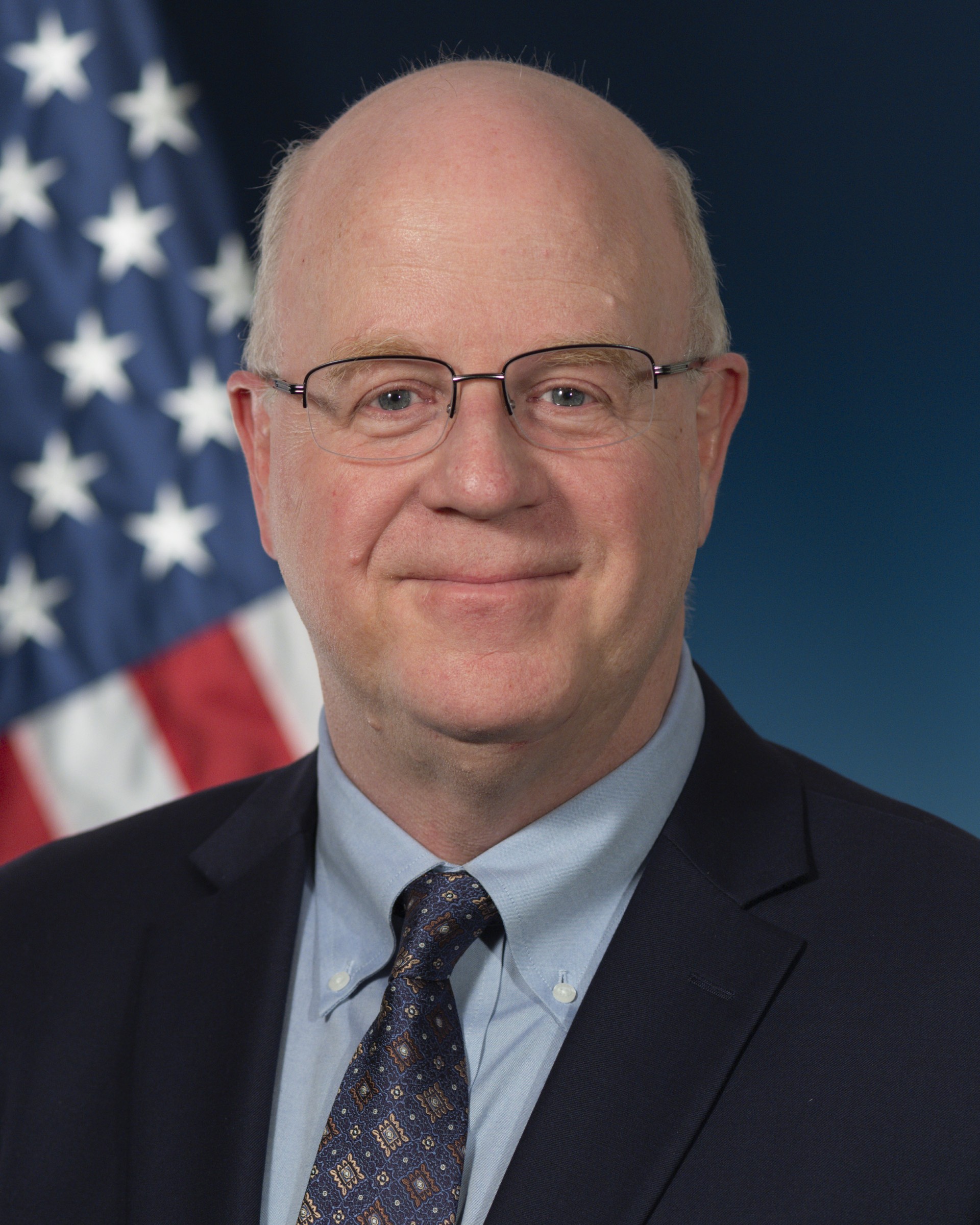
Bio: Dr. Matthew Wilding joined the Defense Advanced Research Projects Agency (DARPA) in 2022. He leads programs in software engineering and critical system assurance.
Wilding came to DARPA from Collins Aerospace, where he managed the trusted methods group, working with Collins product groups and government research sponsors to pioneer rigorous development methods and apply them to computer-based products. He served as a company subject matter expert on formal verification, and he led the machine-checked verification of a separation kernel in the AAMP7 microprocessor’s firmware and the development of the Turnstile high-assurance network guard.
Earlier in his career, Wilding founded and led a digital vision research group, researched how to use automated theorem provers to establish hardware and software correctness, and worked as a software engineer. He holds a PhD in Computer Sciences from the University of Texas at Austin.
DARPA’s Intrinsic Cognitive Security (ICS) program is using mathematical approaches, known as formal methods, to guarantee that mixed reality (MR) system designs mitigate potential cognitive effects. MR merges real and virtual worlds in real time. Cognitive effects that have been demonstrated in virtual settings include manipulating emotion, inducing cybersickness, causing confusion or anxiety, and reducing trust in equipment. Cognitive engineering principles are applied to commercial MR systems designs, but today’s methods do not ensure that systems operate safely when facing an adversary intent on interfering with a mission. This talk describes challenges faced by MR system developers and highlights ICS research progress.
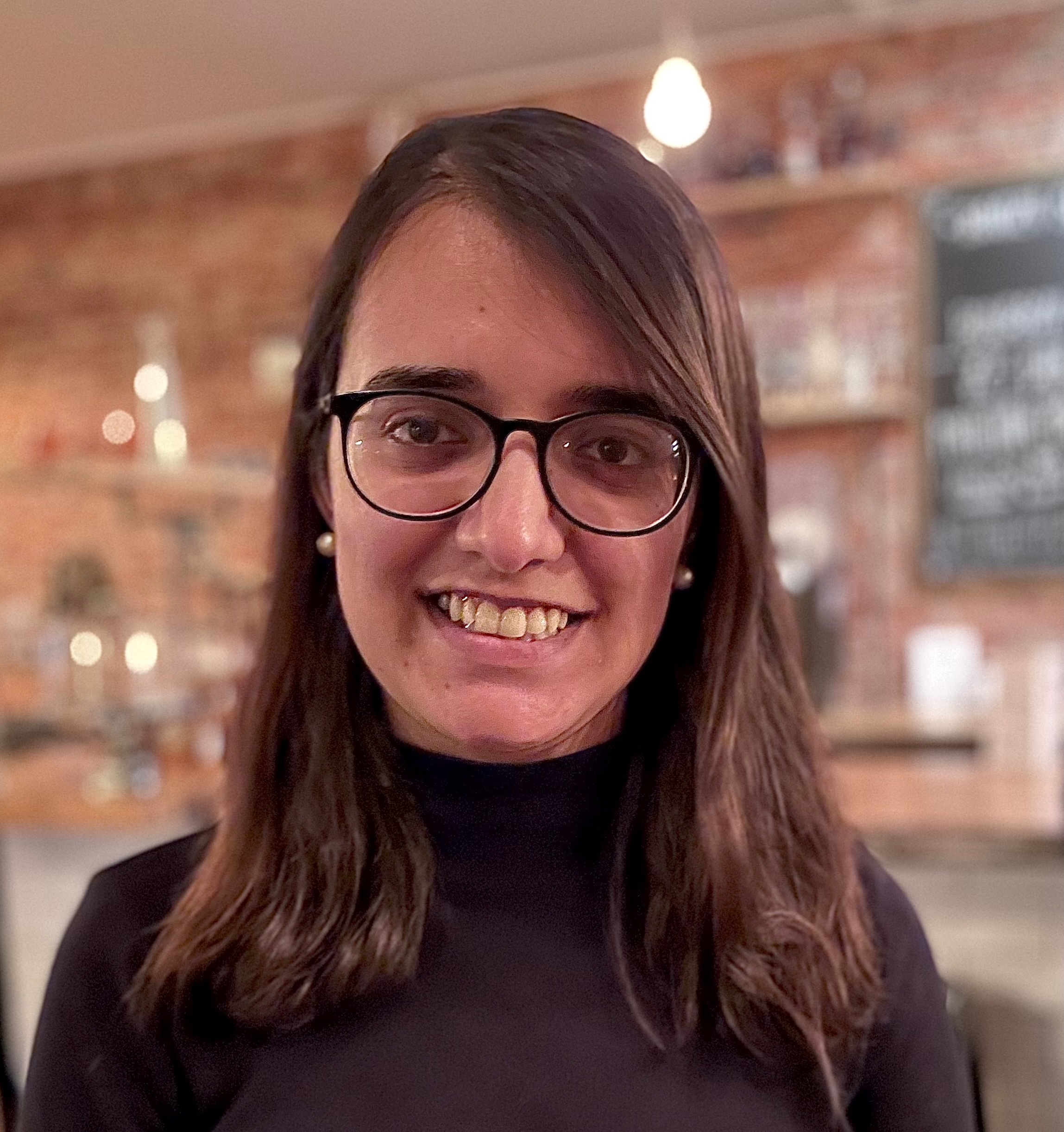
Bio: Habiba Farrukh is an Assistant Professor in the Department of Computer Science at the University of California, Irvine, where she leads the Security and Privacy of Emerging Computing Technology (SPECT) Lab. Her research combines system design and program analysis with AI and human-centered methods to uncover threats in emerging platforms such as extended reality, wearables, IoT, and other physical AI systems, and to build defenses that are both technically robust and aligned with users' needs. Her work has been published at top venues including IEEE S&P, USENIX Security, ACM CCS, NDSS, and ACM MobiCom. She is a recipient of the NSF CAREER Award, and her work has received a Best Paper Honorable Mention Award at USENIX Security. She received her Ph.D. in Computer Science from Purdue University.
Extended reality (XR) devices are quickly becoming everyday platforms not only for socializing, learning, and entertainment, but also for critical applications in domains such as healthcare, manufacturing, and defense. To deliver immersion, XR systems continuously sense users' bodies and surroundings, blend content from many parties into a shared 3D space, and offload trust to user devices that platforms do not fully control. These same design choices create new attack surfaces with no direct counterpart on traditional computing platforms such as mobile and the web. In this talk, I will present our work uncovering security and privacy risks across the XR stack, from sensing users and their surroundings, to perceiving and interacting with virtual content, to sharing virtual spaces with others, as well as the app ecosystem that delivers these experiences. I will also discuss defenses and what users' own experiences reveal about their tradeoffs, and conclude with open challenges and opportunities as AI reshapes both how XR systems are attacked and how they can be defended.
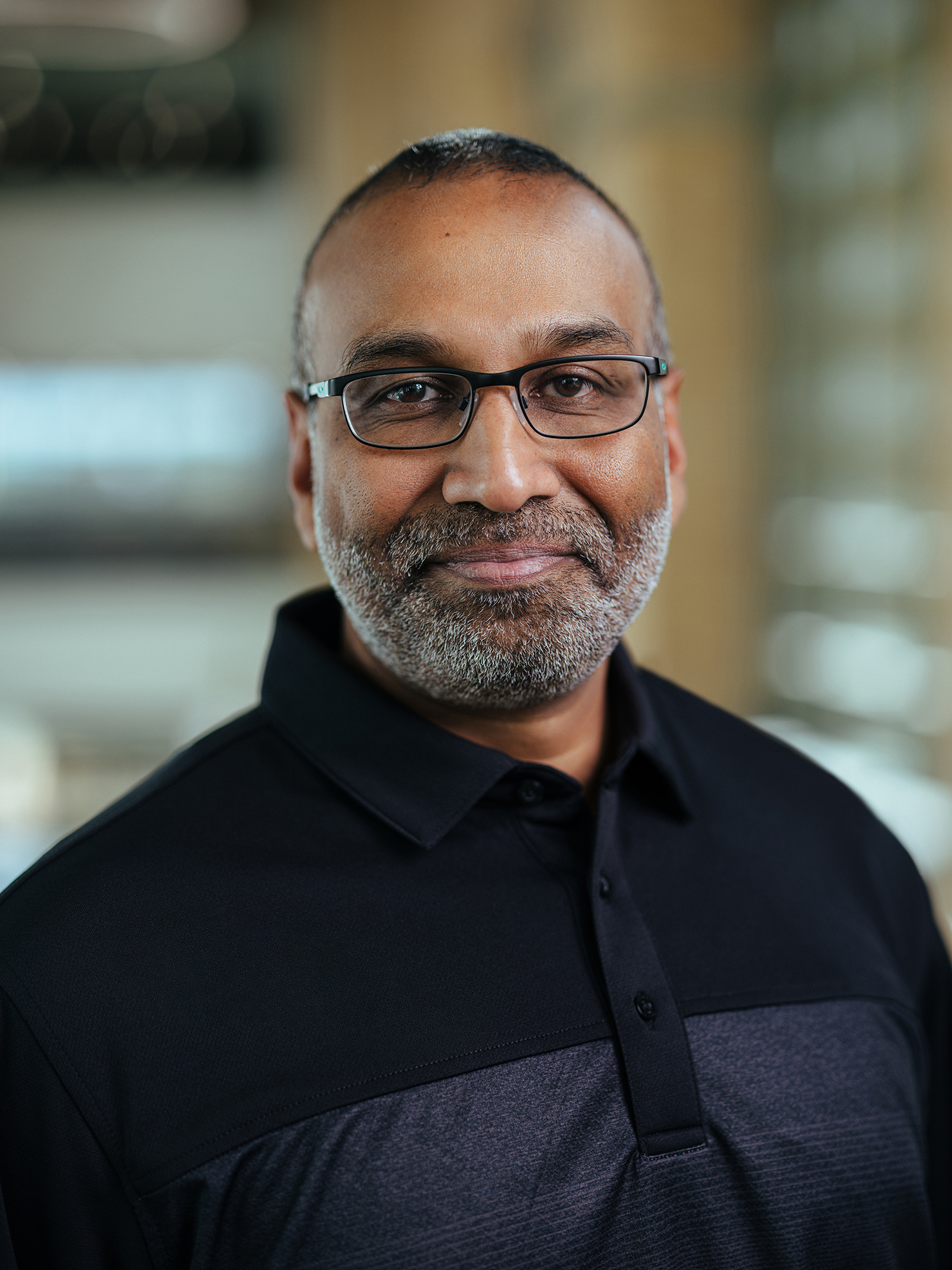
Bio: Murtuza Jadliwala, PhD is an Associate Professor in the Department of Computer Science at the University of Texas at San Antonio (UT San Antonio), where he directs the Institute for Cyber Security (ICS) and the Security, Privacy, Trust and Ethics in Computing Research Lab (SPriTELab). He obtained his doctoral (PhD) degree in Computer Science from the University at Buffalo, State University of New York in 2008. Prior to joining UT San Antonio, he was a Post-doctoral Fellow at the Swiss Federal Institute of Technology (EPFL) in Lausanne, Switzerland (2008 – 2011) and an Assistant Professor in the Electrical Engineering and Computer Science department at Wichita State University in Wichita, Kansas (2012 – 2017). He is a recipient of the AFOSR Summer Faculty Research Fellowship in 2015, the Dwayne and Velma Wallace Excellence in Teaching Award in 2017, the NSF CAREER award in 2020, and the ONR Summer Faculty Research Fellowship in 2026. His research broadly focuses on all aspects of cyber and cyber-physical systems security & privacy, with a special focus on Mobile & IoT Security, Privacy Enhancing Technologies, Adversarial Machine Learning & Generative AI Security, and the design of Mobile/Ubiquitous Sensing Algorithms, Systems and Applications. He has received Distinguished Paper Awards at IEEE WristSense (2018), USENIX Security (2025) and NDSS (2025).
Extended reality (XR) users live in two worlds at once: the physical world their bodies occupy and the virtual world their headsets render. In this talk, I will argue that many pressing XR security and privacy challenges arise at the boundary between these worlds, and present three studies from my group that probe it from different directions. First, I will show how the boundary can serve as a shield: AR glasses can overlay randomized keyboard layouts visible only to the user, defeating both visual and side-channel shoulder surfing. Next, the physical world leaks into the virtual one: motion data from users' smartphones and smartwatches, correlated with their avatars' movements, can de-anonymize them in social VR applications. Finally, the virtual world leaks into the physical one: heat radiated by a VR headset, captured with a commodity thermal camera, reveals which application the user is running with over 90% accuracy from about ten seconds of observation, without any access to the device. I will conclude with open challenges in defending XR users against such cross-reality leakage.
8:30 AM to 5:00 PM
The program includes 13 full papers in four sessions, one keynote, two invited talks, and a 90-minute poster and demo session. Each paper has a 15-minute slot: 12 minutes for the presentation and 3 minutes for Q&A and speaker changes. Both invited talks take place before lunch. Network and Spatial Privacy is the final technical session, followed by awards and closing remarks from 4:45 to 5:00 PM.
| Time | Program | Length |
|---|---|---|
| 8:30–8:45 AM | Welcome and opening remarks | 15 min |
| 8:45–9:45 AM |
Keynote talk Matthew Wilding: Intrinsic Cognitive Security |
60 min |
| 9:45–10:30 AM |
Session 1: Authentication, Privacy, and User Trust 3 full papers |
45 min |
| 10:30–11:00 AM | Coffee break | 30 min |
| 11:00–11:30 AM |
Invited talk 1 Habiba Farrukh: Securing Extended Reality: Threats, Defenses, and the Road Ahead |
30 min |
| 11:30 AM–12:00 PM |
Invited talk 2 Murtuza Jadliwala: Leaky Realities: Security and Privacy at the Boundary Between the Physical and Virtual Worlds |
30 min |
| 12:00–12:15 PM | Lunch box pickup | 15 min |
| 12:15–1:45 PM | Poster and demo session | 90 min |
| 1:45–2:45 PM |
Session 2: Interaction Attacks and Gaze Privacy 4 full papers |
60 min |
| 2:45–3:30 PM |
Session 3: XR Security Analysis 3 full papers |
45 min |
| 3:30–4:00 PM | Coffee break | 30 min |
| 4:00–4:45 PM |
Session 4: Network and Spatial Privacy 3 full papers |
45 min |
| 4:45–5:00 PM | Award ceremony and closing remarks | 15 min |
9:45–10:30 AM
9:45–9:57 AM | Q&A and changeover until 10:00 AM
More than a Typing Method: Rethinking the Usability Evaluation of Knowledge-Based Authentication in Virtual Reality
Yuxuan Huang, Qiao Jin (North Carolina State University)
10:00–10:12 AM | Q&A and changeover until 10:15 AM
The Lens Is Not the Problem: Understanding Potential Privacy Risks and User Concerns in AI Glasses
Mohammed Aldeen, Jingwen Yan (Clemson University); Zixun Xiong, Yicheng Zhang (George Mason University);
Long Cheng (Clemson University)
10:15–10:27 AM | Q&A until 10:30 AM
Lag You Can Feel: Within-Person Links Between Latency, Performance, and Trust in Mixed Reality
Peng Wu (Northeastern University); Mingyu Zhu, Zifan Zhou, Jianan Jiang, Haowei Li, Juaren Steiger
(Pennsylvania State University); Nasim Ahmed (Kennesaw State University); Kaiming Huang, Gang Tan
(The Pennsylvania State University); Tian Lan (George Washington University); Rifatul Islam
(Kennesaw State University); Jonathan Dodge (Penn State University); Mahdi Imani (Northeastern University)
12:15–1:45 AM
1:45–2:45 PM
1:45–1:57 PM | Q&A and changeover until 2:00 PM
Towards Hijacking Interactions in Virtual Reality
Zhuolin Yang (University of Arizona); Cathy Y. Li, Arman Bhalla, Ben Y. Zhao, Haitao Zheng
(University of Chicago)
2:00–2:12 PM | Q&A and changeover until 2:15 PM
A Decoy-Aware Adversary Defeats Ghost-Keystroke Defenses in Virtual Reality
Hannaneh B. Pasandi (UC Berkeley); Haniyeh B. Pasandi (University of Maryland, College Park)
2:15–2:27 PM | Q&A and changeover until 2:30 PM
Where Might You Look? Task-Driven Gaze Prediction for Attack-Surface Estimation in Mixed Reality
Michael Sprintson (Johns Hopkins University); Jonathan Williford, Jennifer Xu (STR)
2:30–2:42 PM | Q&A and changeover until 2:45 PM
Formal Guarantees for Securing XR User Status in Streams of Eye-Tracking Data
Miguel Lopez, Anish Narkar, Jan Michalak (Virginia Tech); Jeffrey Lubin (SRI International);
Brendan David-John (Virginia Tech)
2:45–3:30 PM
2:45–2:57 PM | Q&A and changeover until 3:00 PM
Agentic Framework for Automated Security Analysis in Multi-User Extended Reality
Mutahar Ali, Habiba Farrukh (University of California, Irvine)
3:00–3:12 PM | Q&A and changeover until 3:15 PM
ProViewer: A Proximity- and View-Aware Framework for Detecting UI Security Risks in Extended Reality Applications
Bertram Liu, Vamsi Shankar Simhadri (George Mason University);
Daisuke Mashima (Singapore University of Technology and Design);
Xiaokuan Zhang (George Mason University)
3:15–3:27 PM | Q&A until 3:30 PM
Meta Lens: A Runtime Measurement Framework for Meta Quest Camera Security
Nikolaos Ntokos, Nahin Kumar Dey, Gayatri Sravya Siripurapu, Wenjing Luo, Song Tu Linh Do,
Faysal Hossain Shezan, Jiayi Meng (The University of Texas at Arlington)
4:00–4:45 PM
4:00–4:12 PM | Q&A and changeover until 4:15 PM
GPSniffer: Group-based Location Inference Attack in Augmented Reality using Network Traffic Analysis
Shuaikang Hou (Georgia State University); Srinivasan Murali (Texas A&M University-San Antonio);
Mingjing Liang (unaffiliated); Mingyan Xiao (Cal Poly Pomona); Huadi Zhu (Georgia State University)
4:15–4:27 PM | Q&A and changeover until 4:30 PM
What AR Glasses Leak: Physical Scene Inference from Encrypted Traffic
Naureen Hoque (Grand Valley State University)
4:30–4:42 PM | Q&A until 4:45 PM
Learning-Based Reconstruction Attacks on Coordinate-Obfuscated Point Clouds
Mohammad Waquas Usmani (University of Massachusetts Amherst);
Susmit Shannigrahi (Tennessee Technological University);
Michael Zink (University of Massachusetts Amherst)